CRAFT YOUR WELLNESS
Clinically grounded workbooks and books for doing real work on real life issues
THE INTERNAL WORLD
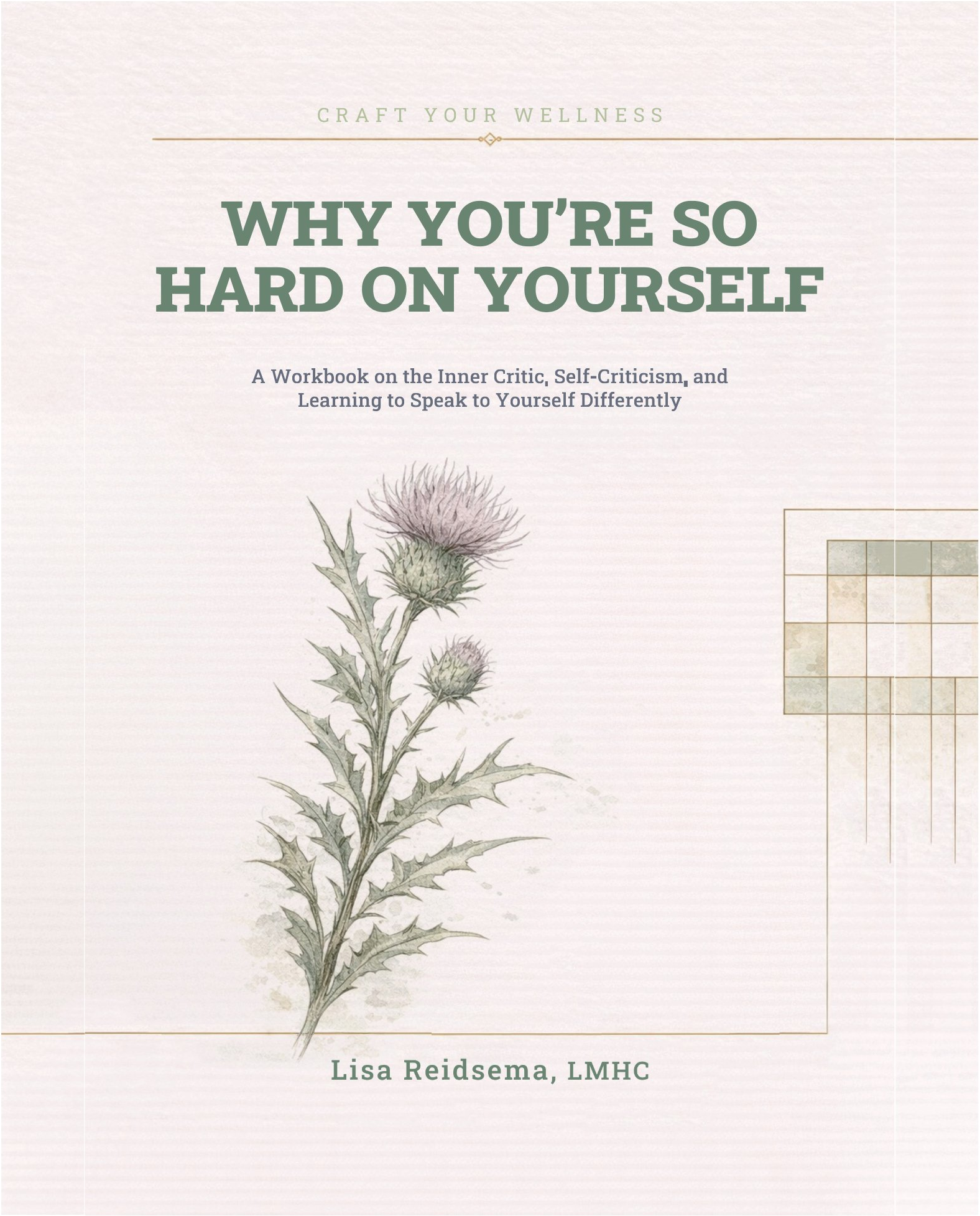
Why You're So Hard on Yourself
For adults who know they are too hard on themselves and have never been able to make the voice stop.
You would never speak to someone you love the way you speak to yourself. And yet the voice keeps running, cataloguing what you got wrong, what you should have done differently, and what you are not quite enough of. It has been running so long it sounds like the truth.
This workbook asks where that voice came from, what it learned, and what it has been protecting. Then it asks what you want to say instead.
This is not a workbook about positive thinking. It is a workbook about honest thinking, and the difference turns out to matter.
You have been your own hardest critic long enough. This workbook is about what you say instead.
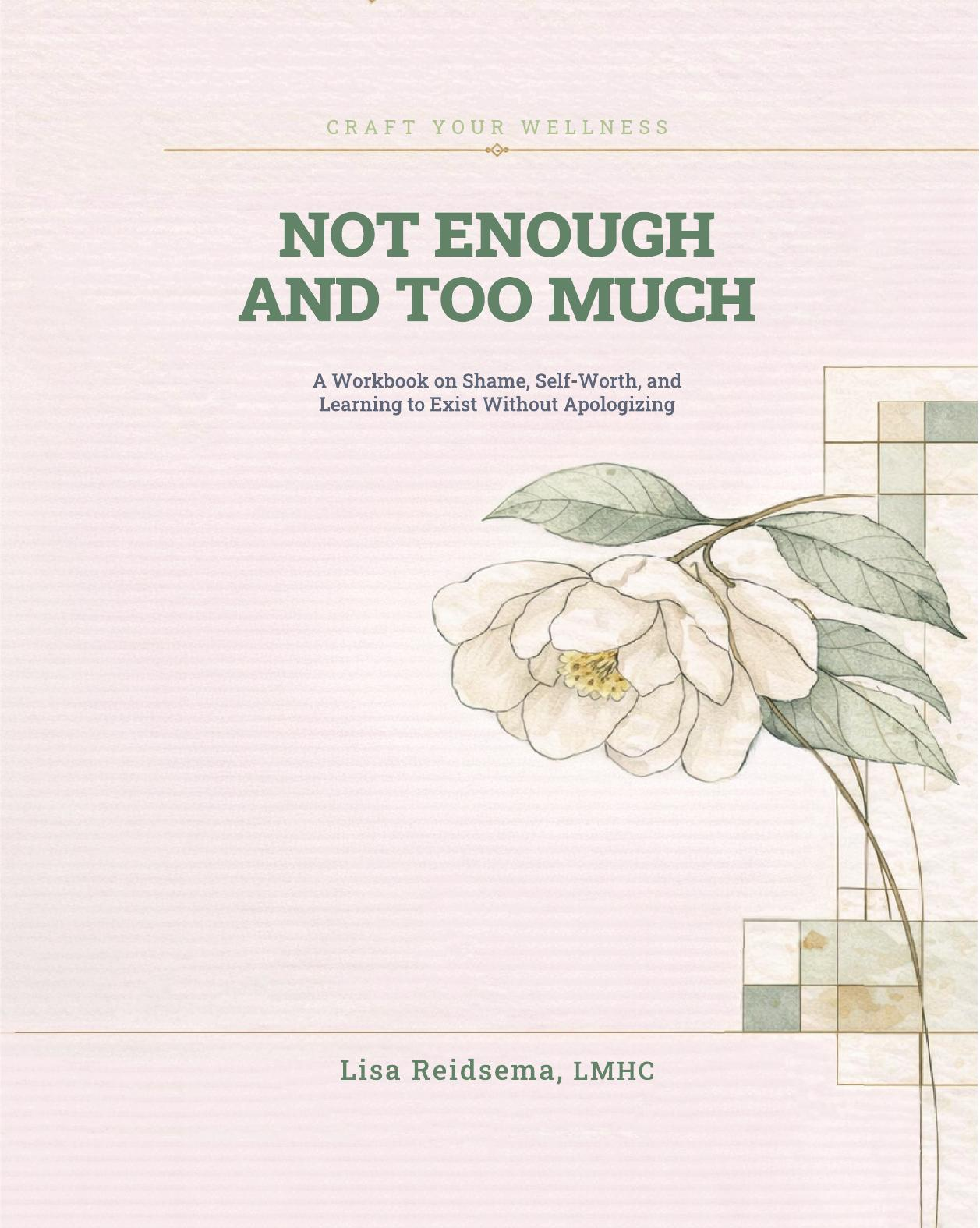
Learning to Believe Yourself
For adults who second-guess everything they feel, especially in relationships, and have stopped trusting their own read on things.
You know what you felt. And then, almost immediately, you begin to wonder if you have it right. Maybe you misread it. Maybe you are too sensitive. Maybe the other person had a point. The second-guessing arrives so fast it feels like reason, but it is not reason. It is a pattern, and it has a history.
This workbook traces that history. It looks at where you learned to distrust your own read on things, what that distrust has cost you, and what it would mean to take your own experience seriously again.
You have been talking yourself out of what you know long enough. This workbook is about finding your way back to it.
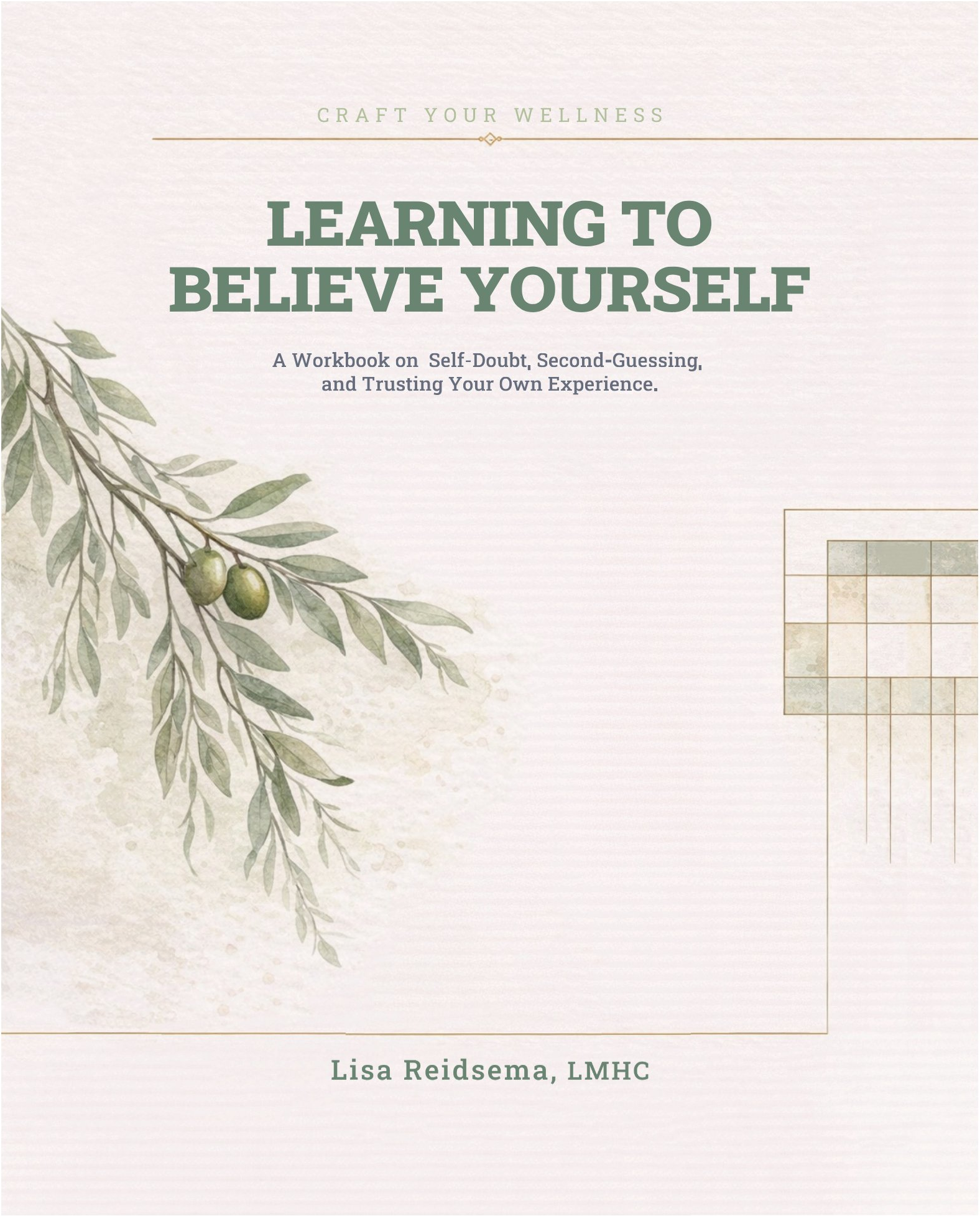
Not Enough and Too Much
For adults who move through the world apologizing for taking up space and have never understood why.
Shame does not arrive announcing itself. It arrives as the instinct to make yourself smaller, to apologize before anyone asks, to take up less room than you are entitled to. It arrives as the certainty that if people saw the full picture, they would find you wanting.
This workbook is about that certainty and where it came from. It traces shame back to its origins, maps what it has been costing you, and builds the practice of existing without the constant apology that shame requires.
You were not born believing you were not enough. That was learned, and what was learned can be examined.
You have been apologizing for existing long enough. This is where that stops.
THE NERVOUS SYSTEM
What Stayed After
For adults living in the aftermath of a medical event: diagnosis, trauma, gaslighting, or loss of the self that existed before it happened.
Something happened. It happened in a body, and that body is still yours, and you are still living in the aftermath of it. The medical event, the diagnosis, the thing that changed what before and after mean. Most frameworks focus on what was lost.
This workbook focuses on what remained. It begins by naming what the experience actually cost, across all the forms that cost takes. It maps what the trauma left in the body, the nervous system, and the sense of self. And then it asks the question its title asks: not what was lost, but what stayed after.
Different is not lesser. This workbook is about inhabiting what is actually here.
The medical event took a great deal. This workbook is about what it did not take.
What Stopping Didn't Fix
For adults who left self-harm behind and are still waiting to feel free.
You stopped. That took more than people know. And yet something remains. Not the behavior, but what the behavior was managing. The feeling that the work is unfinished, that stopping was the beginning of something rather than the end, that there is a version of free you have not reached yet.
This workbook is for that version. It looks honestly at what the self-harm was doing, what it cost, and what has been left unaddressed since stopping. Not to relitigate the past but to finish the work that stopping began.
Stopping was the first act. This workbook is about what comes next.
You did the hardest part. This workbook is about the rest of it.
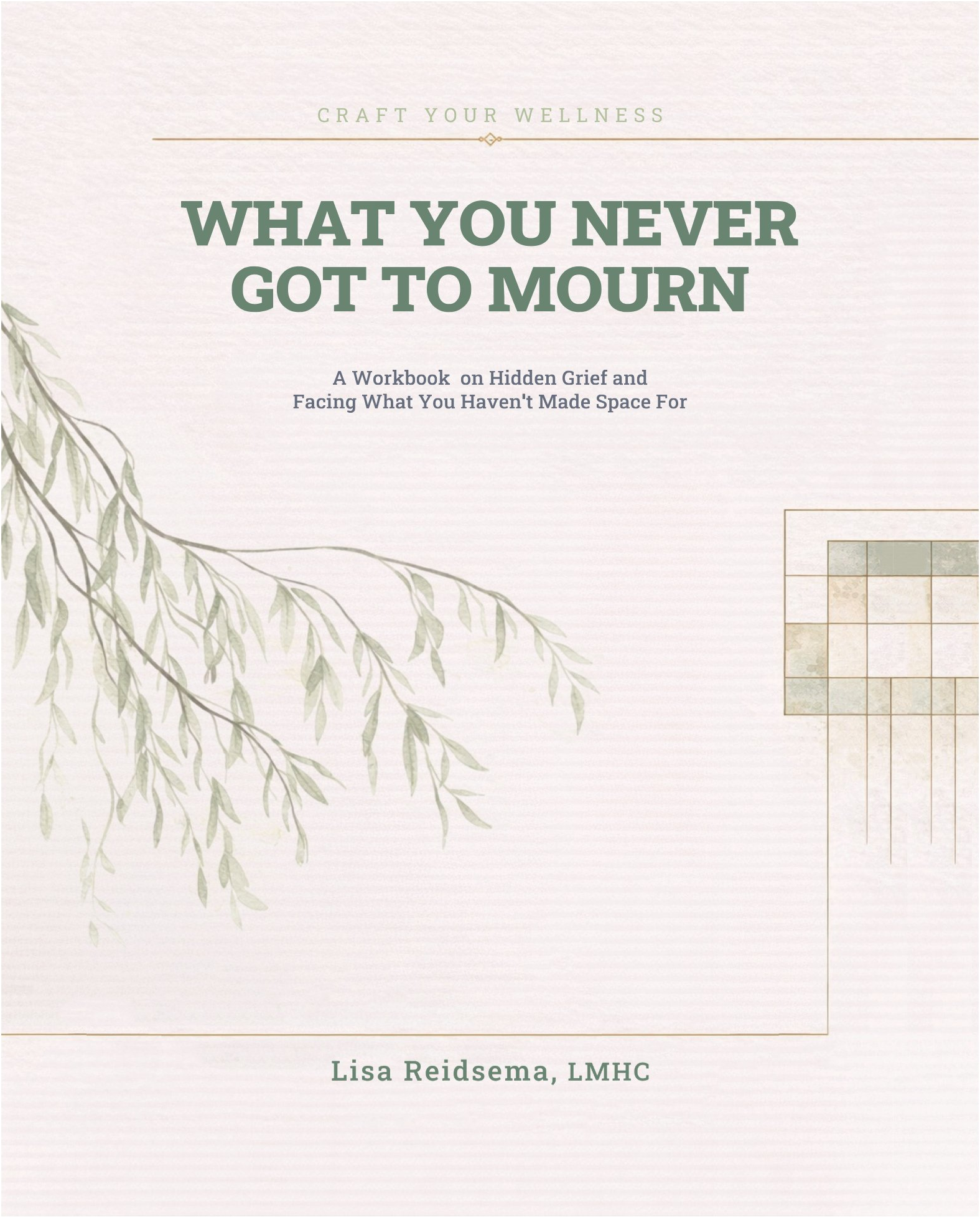
What You Never Got to Mourn
This is for adults who carry losses without a name and grief without a container.
Not every loss comes with a funeral. Some losses never got a name. The friendship that ended without acknowledgment. The childhood that was not safe enough to be a childhood. The version of your life you were moving toward that quietly became impossible.
This workbook is for that grief. It helps you name what you have been carrying, trace what happened to the losses that could not be felt directly, and begin the work of carrying it all differently.
The grief does not have to resolve. It has to be acknowledged. That is where this workbook begins.
Some grief has been waiting a long time to be named. This is where that happens.
The Anxiety Beneath the Anxiety
For adults whose nervous system never got the message that things are safe now, no matter how much they know it intellectually.
The alarm keeps going off even when there is nothing in the room. You know, intellectually, that you are safe. And yet the body does not get the message. The scanning continues. The bracing continues. The exhaustion of being on alert in a life that looks, from the outside, like it should feel fine.
This workbook is about the anxiety underneath the anxiety. Not the surface presentation but the nervous system that learned, under very specific conditions, that safety could not be assumed. It traces that learning back to where it started and builds the practice of teaching the body something different.
The alarm was installed for a reason. This workbook is about understanding that reason and learning to recalibrate.
Your nervous system learned this. That means it can learn something else.
RELATIONAL PATTERNS
When Limits Feel Like Betrayal
For adults who cannot say no without guilt and have spent years giving more than they have.
The yes comes automatically. Before you have time to check whether you mean it, before you have located what it will cost, the yes is already out. That is not generosity. That is a pattern, and it has a history.
This workbook is about that pattern and where it came from. It traces the roots of people-pleasing, names what chronic over-giving has cost you, and builds the practice of saying no without requiring yourself to feel terrible about it first.
You do not have to earn the right to your own limits. This workbook is about believing that.
Your limits are not a betrayal. This workbook is about learning to live like that is true.
The Habit of Making Yourself Small
For adults who learned early that taking up room was dangerous and have been adjusting ever since.
You learned early that taking up too much room was dangerous. So you adjusted. You made yourself agreeable, undemanding, and easy to be around. You got very good at reading what other people needed and very unpracticed at knowing what you needed. The smallness stopped feeling like a choice and started feeling like who you are.
This workbook is about the difference between those two things. It traces where the smallness came from, what it has been protecting, and what the practice of taking up room actually looks like when the instinct to shrink has been running for a long time.
You were not born small. You were taught to be. This workbook is about unlearning that.
You were not born small. This workbook is about what it looks like to stop acting like you were.
What Betrayal Leaves Behind
For adults who were betrayed by someone they trusted and have not been the same since.
Betrayal does not end when the relationship does. It leaves something behind. A changed relationship to trust, to your own judgment, to the question of whether people are safe. It changes how you read situations, how close you let people get, how long it takes before you can believe that what someone says is what they mean.
This workbook is about what betrayal left in you. Not to keep you there but to name it honestly, trace what it has cost, and begin the work of finding your way back to a version of yourself that can trust again without requiring you to forget what happened.
What happened was real. So is the way back. This workbook is about both.
Betrayal changes things. This workbook is about learning to live honestly in the aftermath of that.
The Rules Nobody Said Out Loud
For adults who grew up in a difficult family system and are still living by rules they never chose.
Every family has a system. Rules about what could be said, what had to stay quiet, whose needs counted, what loyalty required. You did not choose these rules. You absorbed them before you had language for them. And they did not stay in the house where you learned them. They traveled with you.
This workbook names those rules. It traces the family system you grew up inside, the role you were given within it, and the ways that system is still organizing your relationships, your sense of what you deserve, and your understanding of what belonging requires.
The rules are not permanent. But you have to see them clearly before you can decide which ones you are actually keeping.
The rules you grew up inside are still running. This workbook is about deciding which ones you actually chose.
What You Called Love
For adults who lost themselves inside a relationship and are trying to find their way back.
The adjustment happened slowly. That is usually how it goes. Not a single moment where you decided to become smaller, but an accumulation of small decisions, each one reasonable in isolation, that added up over time to someone you almost didn't recognize.
This workbook is about understanding how that happens. It traces the pattern that made the relationship feel like home, maps what was actually operating once you were inside it, and builds the practice of coming back to yourself. Not by prosecuting what happened but by seeing it clearly enough that it does not simply happen again.
What you called love is worth understanding. This workbook is about that understanding.
The love was real. This workbook is about seeing it clearly enough that the next one doesn't ask you to disappear.
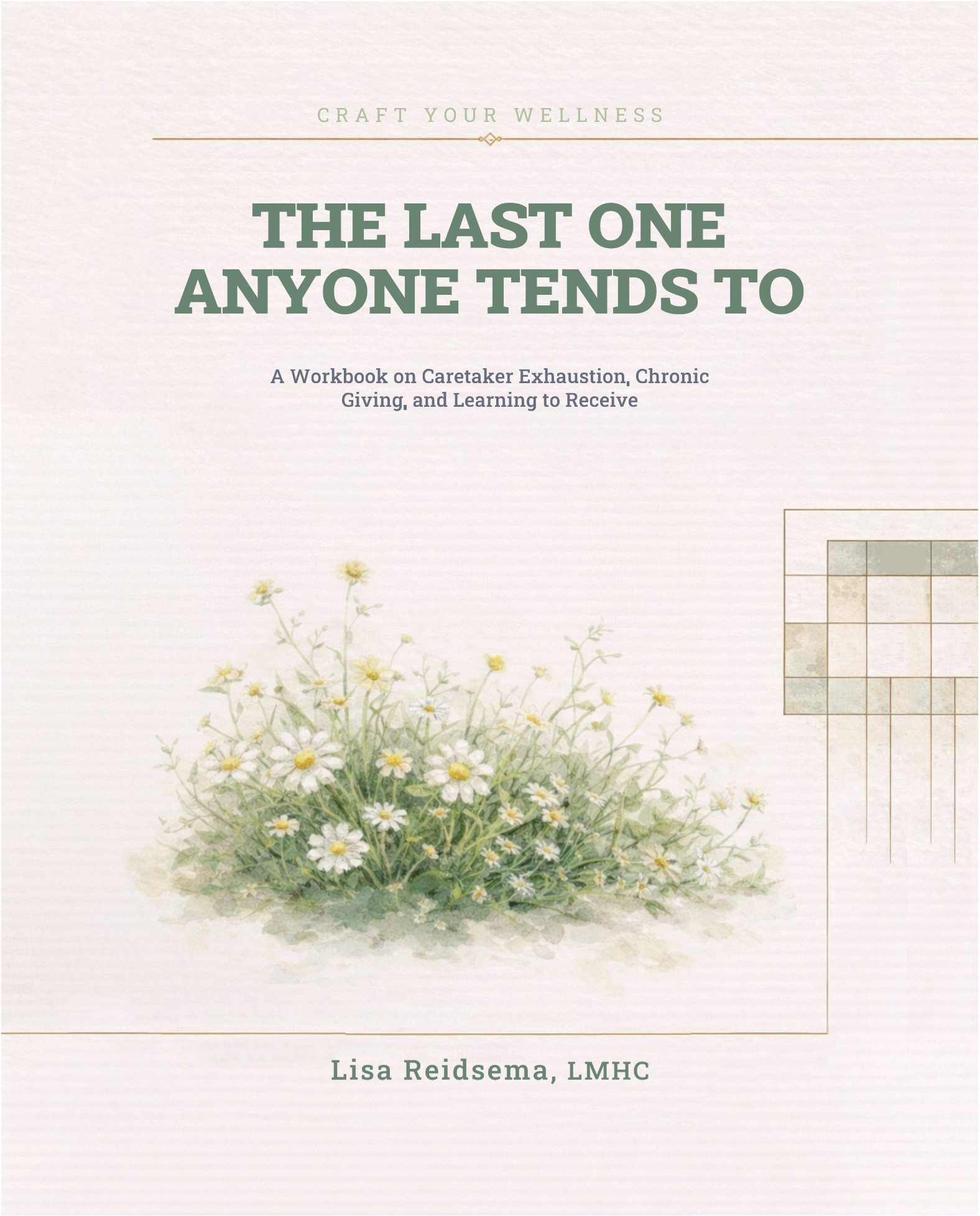
The Last One Anyone Tends To
For adults who take care of everyone and have never learned how to be on the receiving end.
There is always someone who needs something. And you have always been the one who notices, who steps in, who makes sure. So reliably that it stopped occurring to anyone to ask whether you were all right. So reliably that it stopped occurring to you to wonder.
This workbook is for the person at the end of the line. It names what chronic caretaking costs, traces where the compulsion to give came from, and builds the practice of receiving without guilt, resting without justification, and existing as someone whose needs count alongside everyone else's.
You have been tending to everyone. This workbook is about someone tending to you.
You have been the last one anyone tends to for long enough. This workbook is about what it looks like to be someone that includes you.
UPCOMING BOOKS & WORKBOOKS
Coming in June
What You Called Love
A book about relationships, losing yourself, and what it takes to come back!